September 26th, 2017

Also known as onchophagia, the habit of nail biting is one of the so-called “nervous habits” that can be triggered by stress, excitement, or boredom. Approximately half of all kids between the ages of ten and 18 have been nail biters at one time or another. Experts say that about 30 percent of children and 15 percent of adults are nail biters, however most people stop chewing their nails by the time they turn 30.
Here are four dental and general reasons to stop biting your nails:
1. It’s unsanitary: Your nails harbor bacteria and germs, and are almost twice as dirty as fingers. What’s more, swallowing dirty nails can lead to stomach problems.
2. It wears down your teeth: Gnawing your nails can put added stress on your pearly whites, which can lead to crooked teeth.
3. It can delay your orthodontic treatment: For those of our patients wearing braces, nail biting puts additional pressure on teeth and weakens roots.
4. It can cost you, literally: It has been estimated that up to $4,000 in extra dental bills can build up over a lifetime.
Dr. Gina Pinamonti and our team recommend the following to kick your nail biting habit:
- Keep your nails trimmed short; you’ll have less of a nail to bite.
- Coat your nails with a bitter-tasting nail polish.
- Ask us about obtaining a mouthguard, which can help prevent nail biting.
- Put a rubber band around your wrist and snap it whenever you get the urge to gnaw on your nails.
- Think about when and why you chew your nails. Whether you are nervous or just bored, understanding the triggers can help you find a solution and stop the habit.
- If you can’t stop, behavioral therapy may be an effective option to stop nail biting. Ask Dr. Gina Pinamonti and our team for a recommendation.
September 19th, 2017
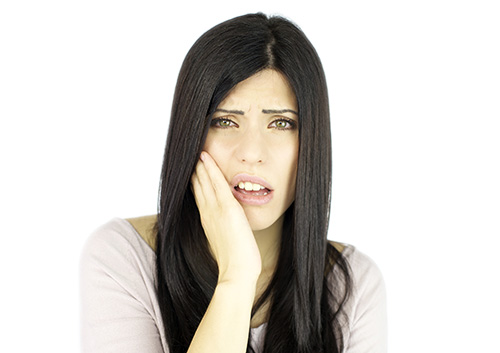
Temporomandibular joint disorders (TMD) describe a set of conditions that involve trouble with your jaw and face muscles. They result from a problem in the temporomandibular joint (TMJ), which is a hinge that connects the temporal bones, in your skull in front of each ear, to your jaw. The joint enables you to talk, yawn, and chew by letting your mouth move.
TMD can be very painful and interfere with functions such as eating and speaking. This what to watch for and how to try to prevent TMD.
Risk Factors for TMD
You are at higher risk for TMD if you are a women than if you are male. The disorder is most common among adults between the ages of 20 and 40 years. Other risk factors for TMJ disorders include the following.
- Arthritis in the area, making movement more difficult
- Excessive tooth grinding, because it increases stress on the joint
- General stress, which can lead you to clench your teeth and strain facial muscles
Symptoms of TMD
Symptoms of TMD can last for just a short while, or for several years. Seeing Dr. Gina Pinamonti is important if your symptoms make it impossible for you to eat regularly or if you have unbearable pain or discomfort. The following symptoms can occur on both or one side of your face.
- Aching or very tired facial muscles
- Jaws that are fixed open or shut without you being able to unlock them
- Grating or popping sounds when you chew or close or open your mouth
- Pain in the entire area, including the mouth, jaw, neck, or shoulders, that comes on when you chew or yawn
Preventing TMD
You can try to prevent TMD by focusing on reducing risk factors. If you grind your teeth at night, ask Dr. Gina Pinamonti about wearing a mouthguard. If you are overly stressed, look into ways to better manage your stress and relax your muscles. Another strategy for trying to prevent the development of TMD is to avoid chewing gum, since that puts stress on your jaw.
If you have questions about TMD, don’t hesitate to contact our Pittsburg, KS office.
September 12th, 2017

It's the big day and your braces are finally coming off! Does that mean you are completely done? Not so fast! After you complete your treatment here at Gina B. Pinamonti, DDS Orthodontics, Dr. Gina Pinamonti and our team will recommend you wear a retainer, which must be worn routinely after treatment in order to hold your teeth in their proper, new position while your gums, ligaments and bones adapt. Most patients are required to wear their retainer every night at first, with many also being directed to wear them during the day. It's important to know there are different kinds of retainers, and today we thought we would explain the differences between them.
Hawley Retainers
The Hawley retainer is one of the most common types of retainers. It is a removable retainer made of a combination of a metal wire that typically surrounds the six anterior teeth and is designed to keep your teeth in place. This retainer is made from impressions of your teeth so that it fits snugly and comfortably in the roof of your mouth, while the wire and acrylic framing keeps your teeth in an ideal position. The acrylic can also be personalized with a large number of colors or patterns.
Essix (Clear) Retainers
The Essix retainer is a transparent removable retainer that fits over the entire arch of your teeth. This clear or transparent retainer fits over the entire arch of teeth and is produced from a mold. Similar to Invisalign’s clear aligner trays, Essix retainers have no metal or wires. They can also be used to produce minor tooth movements and can be helpful in prevention of tooth wear due to tooth grinding at night.
Bonded Retainers
Bonded lingual retainers are cemented directly to the inside surface of your lower canines. Dr. Gina Pinamonti and our team at Gina B. Pinamonti, DDS Orthodontics encourage our patients with bonded lingual retainers to be careful with their bite as the bonding material may break due to incorrect biting and cause your teeth to shift. As with removable retainers, it is important to keep your bonded retainers clean. When brushing, make sure to carefully clean the inside of your lower teeth, as well as the wire itself.
The retention phase of treatment begins when the patient’s braces are removed. Retainers are worn full time, typically for the first nine months, except while eating. Retainers should also be removed before brushing your teeth.
If you have any questions about the retainers we offer or to learn more about post-orthodontic treatment, please feel free to contact us at our convenient Pittsburg, KS office and we will be happy to answer any of your questions!
September 6th, 2017
 September 2017 Employee Spotlight - Sandee Reeves-Bennington
Last month, we spotlighted Nancy Bishop who has been with Dr. Gina at Pinamonti Orthodontics from the beginning 17 years ago. This month, we are spotlighting a second employee who has been with Dr. Gina since the beginning - Sandee Reeves-Bennington.
Sandee began working at Pinamonti Orthodontics in 2001. Sandee’s role is the treatment coordinator which means she assists Dr. Gina with the new patient exams and answers any questions that patients and parents have about treatment.
Her favorite part of working at Pinamonti Orthodontics is building relationships with the patients and parents that come into the office. She also loves watching patient's blossom with confidence when their treatment is complete. Sandee also noted that it’s enjoyable to watch the excitement of just how much a patient’s smile changes from the beginning to the end.
Outside of the office, Sandee has many hobbies that she enjoys. She likes taking motorcycle trips with her husband, spending time with her children, grandchildren, and friends, and playing with her dogs. She has two Australian Shepherds named Molly and Murphy and a new puppy named Chester who is a long haired Dachshund. A fun fact about Sandee is that she loves to bake sweet treats for her friends, family, and the office.
When asked what her favorite memory while working at Pinamonti Orthodontics, Sandee had quite a few. She narrowed it down to her top four. Those included going on a cruise with the office, the annual tradition of dressing up for Halloween, the annual tradition of wearing ugly Christmas sweaters, and constantly working with a great staff.



 Website Powered by Sesame 24-7™