
Our Blog

Worst Candy for Braces

July 31st, 2018

Most kids love candy; actually, most people in general love candy. So when it comes time for you to get braces there can often be a natural conflict between candy consumption and maintaining the integrity of your braces. For that reason, Dr. Gina Pinamonti and our team know that it’s good to know which types of candy are not good for your braces. To better illustrate, here are some candies that you will want to avoid.

Caramel

Caramel is a sweet and often exceedingly sticky and chewy type of candy that just does not mix well with braces. Caramel can cause a mess in regular teeth, but teeth with braces are a whole other story. The sticky candy can very easily get lodged and stuck between the teeth, gums, and braces, making for a difficult task of cleaning your mouth. And if your teeth don't get cleaned properly, cavities can easily form. If you get cavities while you have braces, that could mean additional appointments at our Pittsburg, KS office and an extended treatment time.

Salt Water Taffy

Another sticky and chewy candy to avoid with braces is salt water taffy. For many of the same reasons as caramel, it is best to avoid taffy until you get your braces removed. It may be a long wait, but when it comes to the health of your teeth, and the purpose of your braces, it really is best to avoid taffy.

Popcorn

Popcorn of any kind is best to avoid when you have braces. The kernels can easily do damage to the braces as you chomp on them, and they can get stuck between your teeth and the braces causing discomfort and further complications. In this sense it does not matter which flavor of candy popcorn you eat, all popcorn is bad news until you get your braces off.

Generally speaking, any candy that is chewy, crunchy, or sticky is not a good idea to eat with braces in your mouth. These types of candy will make life wearing braces much more difficult than if you were to just wait until your braces come off. With a little patience you will be back to eating all your favorite candy again, and with straightened teeth at that.

How do braces move my teeth?

July 24th, 2018

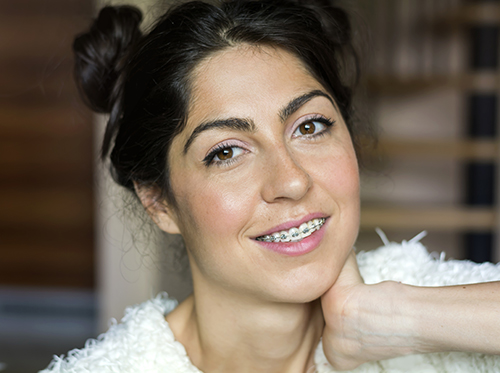
Great question! Tooth movement is your body’s natural response to light pressure applied by braces over a period of time (usually two years). Braces work by using brackets that are glued onto your teeth; these brackets have small slots, and that is where Dr. Gina Pinamonti and our team insert orthodontic wires. These wires are held in place by small elastic ties that fit around the brackets. As time passes during your treatment, these wires apply pressure on your teeth, which sets in motion the movement of your teeth into their desired positions. Each of your teeth has a different size and shape to them, as do the brackets. Each bracket is custom-made for the particular tooth on which it’s supposed to fit.

Not long ago, orthodontists had stainless steel wires and that was about it. Today, however, we have a number of different high-tech wires at our disposal to move your teeth faster and more comfortably.

When you first get your braces on, the first wire or two will typically be very flexible, but still strong enough to apply a constant force on your teeth. As your teeth straighten out over time, however, Dr. Gina Pinamonti will use progressively thicker and firmer wires to help move your teeth in place for an ideal bite.

Every time you visit our office for an adjustment, we will swap out the wires in order to keep putting pressure on your teeth, which is why it’s so important for you to keep your adjustment visits during your treatment. Most adjustment appointments are scheduled four to eight weeks apart to give your teeth time to move.

As for rubber bands and elastics, most of our patients will need to wear elastics or rubber bands at some point during their treatments. These elastics typically go from one or more of the upper braces to one or more of the lower braces, and pull on your teeth to move them in the direction they need to move in order to achieve an optimal bite.

If you have any questions about wires, brackets, or elastics, or have any general questions about your treatment, please give us a call at our Pittsburg, KS office.

Adults and Braces

July 17th, 2018

Braces aren’t just for kids. Many grownups are taking advantage of orthodontic treatment and having their teeth straightened at a later age.

Sometimes, patients include adults who already had braces in the past, but their teeth shifted over time once they stopped wearing their retainers. In other cases, adults who have never had braces are tired of having crooked teeth and ready to invest in a beautiful smile.

Whatever the case may be, if you’re looking to straighten your teeth with braces, Dr. Gina Pinamonti would love to help you with this process. Having a dazzling smile can increase your confidence in all areas of your life!

Depending on what you’re willing to spend and how quickly you would like to complete the process, you have various options for getting braces. We all know what traditional metal braces look like. This is a less-expensive route for individuals who have severely crooked or displaced teeth. However, many adults avoid option because the braces are noticeable or distracting in a professional atmosphere.

For people concerned about aesthetics, clear ceramic braces may be a preferable option. This type can still fix extremely crooked teeth or jaw alignment issues. It may be slightly more expensive than traditional metal braces. Patients who choose this treatment route need to be careful not to stain the clear adhesives by drinking too much coffee, red wine, soda, or other beverages that can discolor teeth.

Another great option for adults who don’t want to have visible braces is a clear aligner treatment known as Invisalign®. This popular option differs from traditional braces by featuring a series of clear aligners that are each custom-made for your teeth.

The entire process can take anywhere from three to 18 months to straighten your teeth completely. This may not be the best choice for patients who have an overcrowded mouth or extreme bite issues. Invisalign is often the most expensive option, but it’s great if you’re concerned about your appearance while your teeth are being straightened.

If you’ve been thinking about straightening your teeth with the help of braces, don’t hesitate to contact our Pittsburg, KS office to set up a consultation. From there, Dr. Gina Pinamonti can figure out the best course of treatment, depending on your budget and overall needs.

Adult braces can be a great way to boost your confidence and finally give you the smile you’ve always wanted.

Curing the Nail-Biting Habit

July 10th, 2018

Do you ever find yourself gnawing at your nails? Nail-biting is a very common and difficult to break habit which usually has its beginnings in childhood. It can leave your fingers and nail beds red and swollen. But if you think that your nails are the only ones getting roughed up by nail-biting you'd be mistaken—so are your teeth!

According to a study by the Academy of General Dentistry, those who bite their nails, clench their teeth, or chew on pencils are at much higher risk to develop bruxism (unintentional grinding of the teeth). Bruxism can lead to tooth sensitivity, tooth loss, receding gums, headaches, and general facial pain.

Those are some nasty sounding side effects from chewing on your nails. Most nail-biting is a sign of stress or anxiety and its something you should deal with. So what steps can you take if you have a nail-biting habit?

There are several things you can do to ease up on nail-biting:

  • Trim your nails shorter and/or get regular manicures – Trimming your nails shorter is an effective remedy. In so doing, they'll be less tempting and more difficult to bite on. If you also get regular manicures, you’ll be less likely to ruin the investment you’ve made in your hands and fingernails!
  • Find a different kind of stress reduction – Try meditation, deep breathing, practicing qigong or yoga, or doing something that will keep your hands occupied like squeezing a stress ball or playing with a yo-yo.
  • Wear a bitter-tasting nail polish – When your nails taste awful, you won't bite them! Clear or colored, it doesn't matter. This is also a helpful technique for helping children get over the habit.
  • Figure out what triggers your nail-biting – Sometimes it's triggered by stress or anxiety and other times it can be a physical stressor, like having hang nails. Knowing what situations cause you to bite your nails will help you to avoid them and break the habit.
  • Wear gloves or bandages on your fingers – If you've tried the steps above and they aren't working, this technique can prove effective since your fingernails won't be accessible to bite.

If you're still having trouble with nail-biting after trying these self-help steps, it's best to consult your doctor, dermatologist, or Dr. Gina Pinamonti. For some, it may also be the sign of a deeper psychological or emotional problem.

Whatever the cause, nail-biting is a habit you need to break for your physical and emotional well-being. If you have any questions about the effects it can have on your oral health, please don't hesitate to ask Dr. Gina Pinamonti during your next visit to our Pittsburg, KS office.

Top.